

NEWSLETTER
February 2026
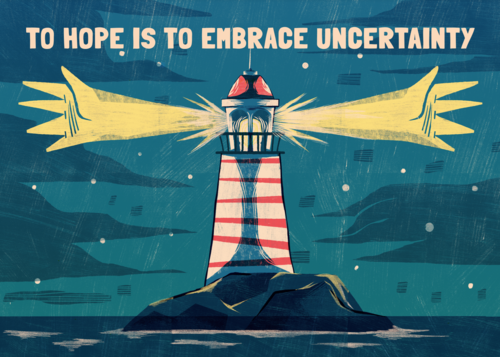
The Seesaw of Hope and Fear
Welcome to the Maina Foundation Newsletter!
Dear Friends
This month’s post is titled The Seesaw of Hope and Fear for a reason.
On 21 July 2026 my debut mystery novel, THE MASALA CHAI MYSTERY CLUB , a light-hearted murder mystery set in the Northeast, will be released. But this January, instead of excitement and joy I find myself seesawing between hope and fear.
I grew up under Apartheid in South Africa. Apartheid was a system of legalized racism where the entire population was divided strictly into four race groups—Whites, Africans, Indians, and Coloreds (people of mixed race). Only Whites, who made up less than twenty percent of the population, were allowed to vote and be in power. All resources and facilities, including schools, hospitals, and housing, were allocated along these racial lines, with Whites alone getting more than what was allocated to all three of the non-white race groups.
Any protests or objections were immediately and viciously stamped out, with the state arresting and murdering thousands of people, many children. I’ve written of my experiences in my nonfiction book DEFYING APARTHEID .
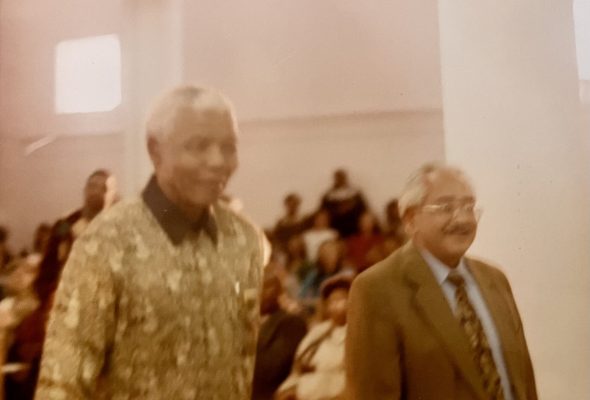
I witnessed firsthand the atrocities, the human rights violations, and the cruelty of a state that is determined to be at war with its own citizens. With Nelson Mandela as an inspiration to South Africans, all my family at one time or another protested Apartheid.
This month, reading about the ICE clampdown in Minnesota, the bravery and resilience of that city’s citizens, the murders of Renee Good and Alex Pretti, and the arrest of hundreds of immigrants, both legal and undocumented, have had me on an emotional roller coaster.
This seesawing has made me introspective. I’ve realized that almost all events of our lives, if not our lives themselves, are a seesaw between hope and fear. Whether welcoming a new baby into the family, starting a new job, moving to a new city or country, or being diagnosed with breast cancer, each milestone brings with it a mix of excitement and uncertainty, and evokes in us a delicate balance between hope and fear.
Hope is the fuel that allows us to anticipate a positive outcome.
On the flip side is Fear, which makes us doubt the outcome and be afraid of the result, or our long-term security.
This duality creates turmoil and forces us to either confront our inner feelings, or collapse under the weight of them.
Many years back I developed a persistent cough. I eventually saw a doctor who sent me for an X-ray, which revealed large lymph nodes in my chest.
My doctor, who knew I am a doctor as well, quite bluntly told me he thought my diagnosis could be cancer. But I had to wait for two agonizing weeks for a mediastinal biopsy.
I left his office, sat in my car, and burst into tears. I bawled like a toddler, for about a minute. Then I felt foolish about crying in my car. I dried my tears and went home to tell my husband the news. He hugged me and I began to cry again, sobbing against his shirt, “I’m going to lose my hair.”
Of course, my husband laughed and said that was the least of my problems.
“But everyone will know!” I wailed.
In defense of myself my fear was not about vanity. I could deal with cancer and chemo and everything else that came with it because I hoped my disease was still curable.
But what I feared the most was that losing my hair would make public my health battles, and then I would be the subject of everyone’s pity.
Thankfully, I turned out not to have cancer, but when I look back on that time, and especially now after these recent events in Minnesota, I realize I was on that seesaw of hope and fear. Fear of what was to come but hope for a good long-term outcome. Fear of losing my hair but hope that my biopsy would show I didn’t have cancer and I’d still be able to keep my hair and avoid the pitiful glances of people around me.
How then do we deal with this seesaw?
Here are a few suggestions that may help:

Self-Awareness:
Acknowledge Your Emotions: Recognizing what makes us hopeful or fearful without judgment, helps us to understand our emotional responses and can provide insight into our thought patterns.
Journaling our thoughts can clarify where our fears come from and allows us to engineer more hopeful solutions.
Mindfulness and Grounding Techniques:
Practicing mindfulness to focus on the present rather than getting lost in future worries or past regrets, accompanied with techniques like deep breathing, can help calm our minds.
Grounding Exercises such as walking, meditation, or even sensory activities like touching a textured object may help bringing us into the present.
Reframing Our Thoughts:
Cognitive Behavioral Techniques such as challenging negative thoughts that feed into fear, and replacing them with balanced, positive thoughts that promote hope may help tip the seesaw toward hope.
Shifting our attention to actions we can take in the present rather than what we cannot control will also tip the seesaw toward hope.
Building Resilience Over Time:
Setting small goals that are achievable can help us build a sense of accomplishment and hope over time.
Seeking out support to discuss our feelings with friends, family, or a therapist can reduce feelings of isolation and fear.
Stopping doomscrolling on social media or taking in news in manageable chunks may also help to minimize fear.
Embracing Uncertainty:
Accepting complexity that the seesaw of hope and fear is normal, allows space for both emotions without trying to eliminate one completely. Adaptability can reduce anxiety about what the future holds.
Finding Meaning and Purpose:
Engaging in activities we love such as hobbies or passions can cultivate hope and distract from fearful thoughts.
Volunteering to help others can instill a sense of community that fosters hope in a better world.
As for my own seesaw, even though some may call me a Pollyanna, I’m hopeful the people of this country will stand together and bring an end to what is happening. And I’m also hopeful my book launch year will be one of fun, excitement and new friends.
Thank you for reading.
NEWS!
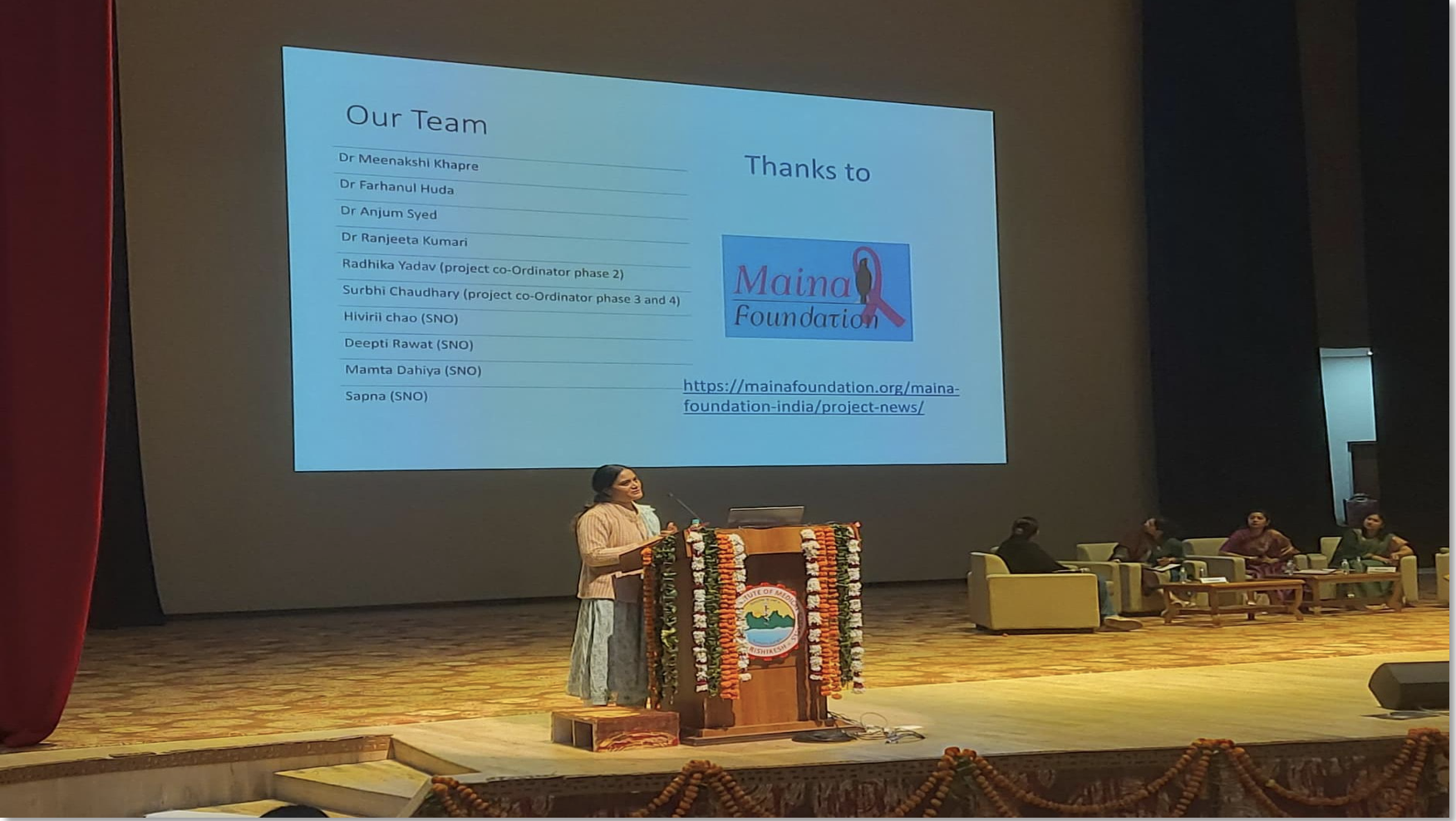
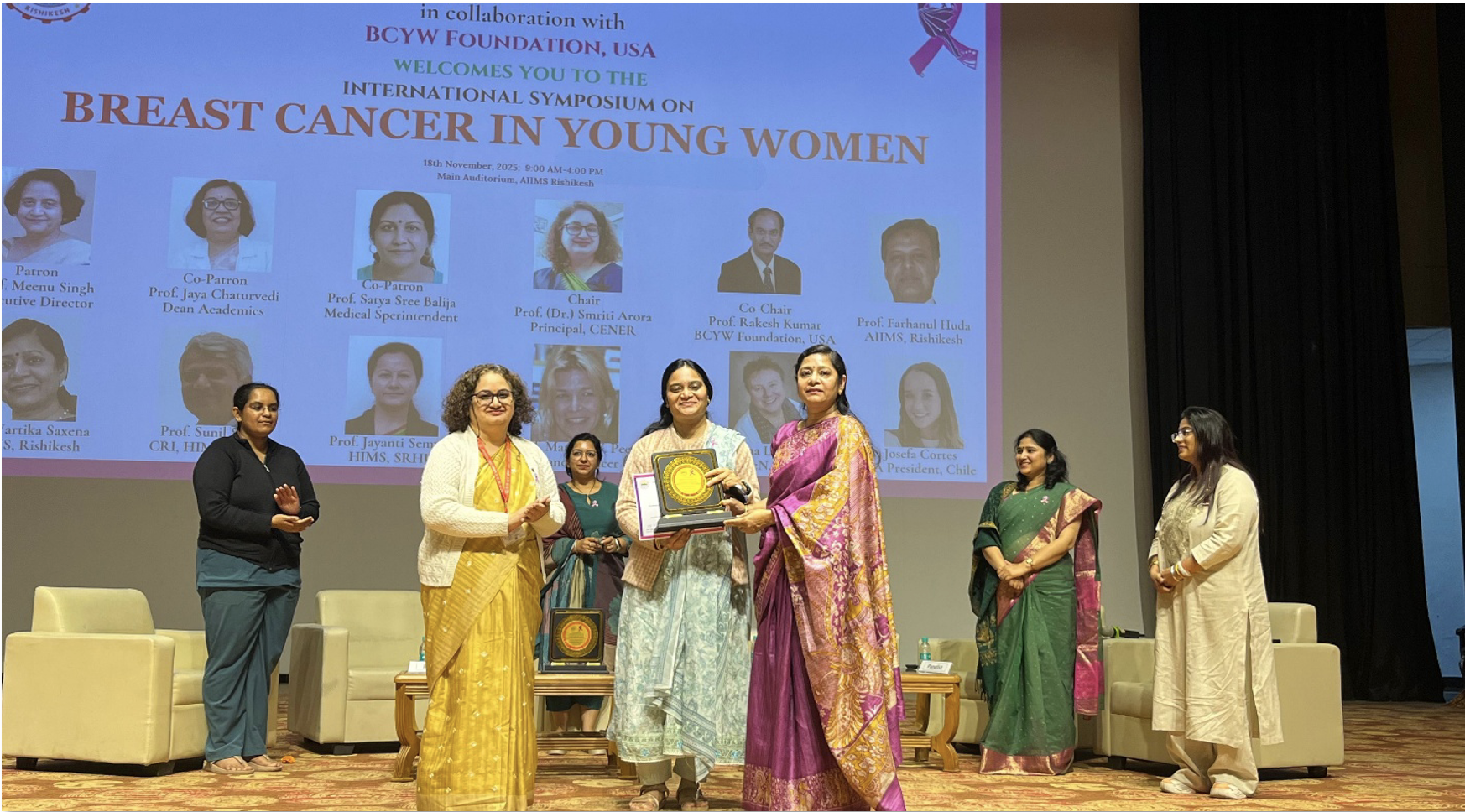
This month our partners in AIIMS, Rishikesh, sent an update on their work in breast cancer prevention, made possible by your donations.
Here is an abstract:
“The project commenced with the training of field workers in the study area of Bhagwanpur.
A total of 16 health camps and multiple health education sessions on breast cancer prevention were conducted across various outreach locations in Bhagwanpur. Through these activities, 500 women underwent clinical breast examination (CBE) and i-Breast examination, while 800 women received education on the importance of breast care and breast cancer prevention.
Among the screened women, 38 were identified as suspected cases. To date, 15 women have reported for further screening at our centre; among them, two cases have been classified as BIRADS 4A, indicating suspicion of malignancy, they got further investigated, in which FNAC and required other test were done and they were found to be normal, while the rest have been categorized as BIRADS 1 or 2. These women are currently being guided for additional investigations as required.”
The AIIMS, Rishikesh team received an award for their sterling work in breast cancer prevention and screening during a panel on Breast Cancer in Young Women, organized by the Centre of Excellence in Nursing Education and Research (CENER), AIIMS Rishikesh.
To our Maina Foundation newsletter readers, thank you for reading and your valuable support! Please consider forwarding this newsletter to anyone who may benefit from this information.
Manju Soni, pen name MJ Soni (she/her), is the author of DEFYING APARTHEID, her part-memoir about being a doctor activist in apartheid South Africa.
Her debut mystery, to be released in July 2026, is THE MASALA CHAI MYSTERY CLUB, and is perfect for fans of Only Murders in the Building and Richard Osman’s The Thursday Murder Club.
Set in coastal New England, it features a retired librarian and her chai-loving friends who involve themselves in solving the murder of their much-despised HOA president when his death has an uncanny similarity to their most recent book club read.
https://mjsoniauthor.com/
We thank you for your continued support!
For more information on Maina Foundation, and to help its mission, go to https://mainafoundation.org or contact us at 860-434-3985 or info@mainafoundation.org
SAVE A LIFE - DONATE NOW
Donations can also be mailed to:
8 Peppermint Ridge, Old Lyme, CT 06371, USA
Subscribe to the Maina Newsletter